How Does the Invisalign® Process Work?

Invisalign® is increasingly becoming a very popular teeth-straightening treatment option. The process is simple and relatively comfortable, which is why it is growing in popularity. However, because it is not as old or traditional as braces, it can be helpful to get familiar with how exactly the process works. Keep reading to learn more about Invisalign® and how it works.
Understanding the Invisalign® treatment process
Below is a quick overview of Invisalign, including what the process entails. Individuals who are considering teeth straightening options can review the following information to get a better idea of what to expect from treatment.
What is Invisalign?
Invisalign is a brand of clear aligners. The aligners are used to correct teeth that are protruding, crooked, or crowded. Invisalign is removable, clear, and plastic, all of which make for an easier treatment process. The aligners can be used for the top or bottom arch, or both.
How the Invisalign process works
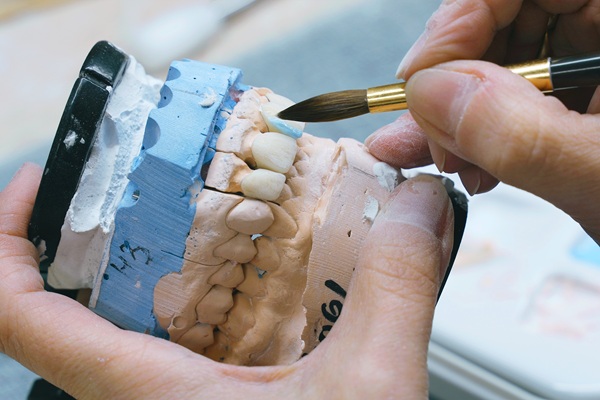
To start, patients will be evaluated for the treatment, which includes an examination and thorough review of the patient's health history. Additionally, the general dentist will help the patient identify their goals, needs, and desires. Once all of this has been determined, the general dentist will take impressions of the patient's mouth. The impressions may be physical or digital. Once taken, a dental lab will custom-create a series of Invisalign trays for the patient. The series will include multiple sets that will be switched out every six to eight weeks over the course of the treatment process.
Some general dentists give the patients the entire series to take home, while others require the patient to go in for regular check-ups where the next set will be provided, based on their progress.
Most patients will need to undergo Invisalign treatment for a year or so, depending on their goals and desires. Ultimately, the general dentist will decide on a timeline prior to starting the process.
Other things to note
With Invisalign, it is important for individuals to understand the responsibility that comes along with the treatment process. Because the aligners are removable, it can be easy to take them out and forget to put them back on. Long-term, repeated situations as such may result in delayed results, which can make the treatment process take longer. General dentists advise patients to wear their Invisalign trays for at least 22 hours a day when not eating or practicing oral hygiene.
Get started with Invisalign®
When looking for further information on Invisalign, it can be helpful to consult directly with a general dentist. An evaluation can be done in order to determine whether or not Invisalign is a suitable option for you. Additionally, the patient can ask questions and go over any concerns that they have about the treatment process.
To find out more about teeth-straightening options or to get scheduled for an appointment, reach out to our office today.
Request an appointment here: https://www.blissdentalsf.com or call Bliss Dental SF at (415) 200-1283 for an appointment in our San Francisco office.
Check out what others are saying about our dental services on Yelp: Invisalign in San Francisco, CA.
Related Posts
Understanding the pros and cons of Invisalign® and veneers is an important first step to deciding which treatment option is right for you. Many are familiar with Invisalign for a straighter smile, but fewer have heard of veneers for orthodontic treatment. This review offers insights into Invisalign and veneers as it relates to correcting teeth…
Periodontics care is specialized dental care for treating and preventing periodontal disease from reappearing. Scaling and root planing may be performed on patients with periodontal disease to eliminate bacterial plaque and other toxins. Gum disease-causing bacteria can reappear three to four months after initial treatment. As a result, the dentist will recommend coming for cleanings…
A full mouth reconstruction rebuilds the bite, teeth, and gum health to restore comfortable function and appearance. Patients consider full mouth reconstruction when multiple teeth suffer from decay, fractures, wear, or loss. The process combines restorative and cosmetic dentistry to improve chewing, speech, and jaw balance. Because the mouth works as a system, addressing several…
A laser dentist can perform dental procedures with better accuracy and effectiveness. Read on to learn about laser dentistry and how it can help make some treatments more comfortable. The field of dentistry has witnessed significant advancements in the last few years. New technologies are transforming what dentists are able to offer their patients, from…